
Finding Newark Resident Records
No single roster names every Newark resident. The search starts with the fact you hold. An address usually opens the municipal tax account, and from there an Essex County land record. Old surnames fit city directories and archive collections. Court questions belong to the New Jersey Judiciary. Birth, marriage, and death requests follow state vital-record rules. Each source answers for one record, never a person's whole life.
Jurisdiction matters at every step. Newark is the Essex County seat, yet the City Clerk, Essex County Register, County Clerk, New Jersey Courts, Department of Health, and State Archives each hold different material. A same-name hit needs a second key. Use a middle initial, a date, a block and lot, an instrument number, a docket, or a historical address. That check limits false matches in a city full of long-established neighborhoods and families.
- Confirm the street address and municipality with the state address lookup.
- For a parcel, note the Newark account, block, lot, qualifier, and property-location wording.
- Search the narrow official index that matches the record type, then retain its date and identifier.
- Compare an independent source before drawing a conclusion about the name or address.
- Ask the issuing custodian for a copy, correction, or restricted record when the index is not enough.
Newark Resident Records Offices
Three local routes handle most first questions. The Essex County Register holds deeds, mortgages, liens, and other recorded land instruments. Newark's online tax search offers a municipal property-account path. The Essex County Clerk runs elections and voter lists. It is not the custodian for Superior Court files, and county OPRA requests go to the County Counsel custodian rather than automatically to the Clerk. Match your question to the office that actually holds the record.
Essex County Register
Hall of Records, Room 130
465 Martin Luther King Jr. Boulevard, Newark, NJ 07102
973-621-4960
Newark Property Search
City of Newark tax-account route
Newark, NJ
Online index
Essex County Clerk Elections
495 Martin Luther King Jr. Justice Building
Newark, NJ 07102
973-621-4920
A street-by-street property trail needs the right keys. The Newark street directory explains how an account and parcel key connect to Register searches, without treating an ownership result as proof of occupancy.
Newark Tax and Parcel Keys
The Newark Online Tax search takes six query types. Enter an Account#, Block, Lot, Qualifier, Owner name, or Location, and results return the account number, block, lot, qualifier, owner, and property location, with View or Pay actions. An owner field is a property-record clue. It is not proof of residency. A mailing address can differ from the situs address, which is the physical property location, so the named owner may not live at the site.
| Search field | Record use |
|---|---|
| Account# | City account identifier for a property result. |
| Block and Lot | Keys that can bridge a tax result to Essex land records. |
| Qualifier | Refines a unit-style or related parcel entry. |
| Location | Address-based route into the city index. |
| Owner | Displayed tax-record name, not a household roll. |
New Jersey property transparency resources add statewide map and annual tax-list context for Newark parcels. The state warns that annual January data can lag a later transfer. NJGIN parcel services supply geometry. Hosted parcel and tax-list layers redact owner names under Daniel's Law, so a blank owner field can be the correct privacy result.
The Newark tax search shows the core property fields. Those fields move a city address toward a dated parcel record.
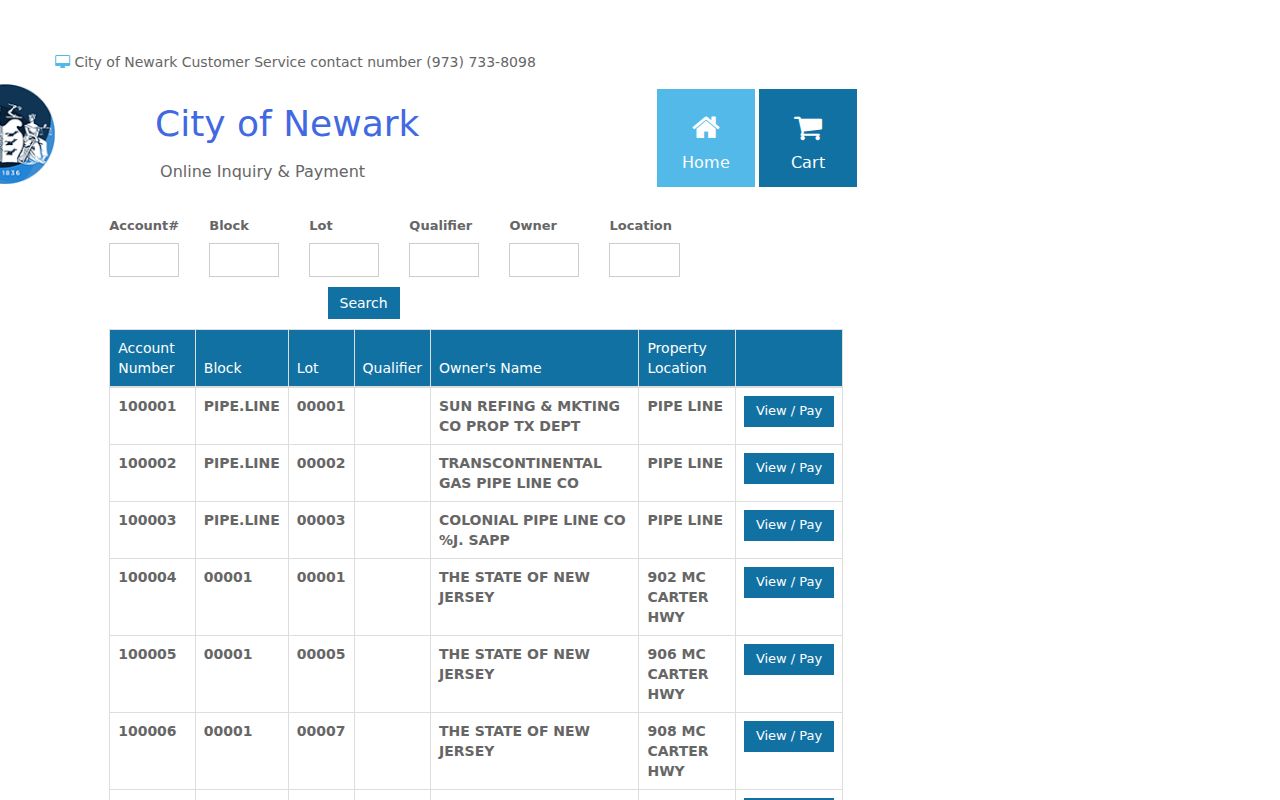
Save the parcel identifiers and the source date before comparing any result against another office's index.
Newark Deed Index Routes
The Essex Register PRESS portal supports four search modes: instrument number, document type, block and lot, and name. Online coverage starts October 1, 1996. Block-and-lot mode requires municipality, block, lot, and date. A name search adds last name or company, first name, document type, and dates. Every range caps at 90 days. A multi-year trail therefore needs consecutive date windows.
A deed records named parties on a transfer instrument. A mortgage, lien, release, or lis pendens carries a different legal meaning. Keep the instrument number, recording date, parties, document type, book and page, and legal-description clue. Older material needs the Register office itself. The State Archives describes Essex deed indexes with partial series coverage from 1688 to 1859. Confirm the reel before relying on it.
The Essex Record Alert page shows the Register-linked monitoring option for a name or block and lot.
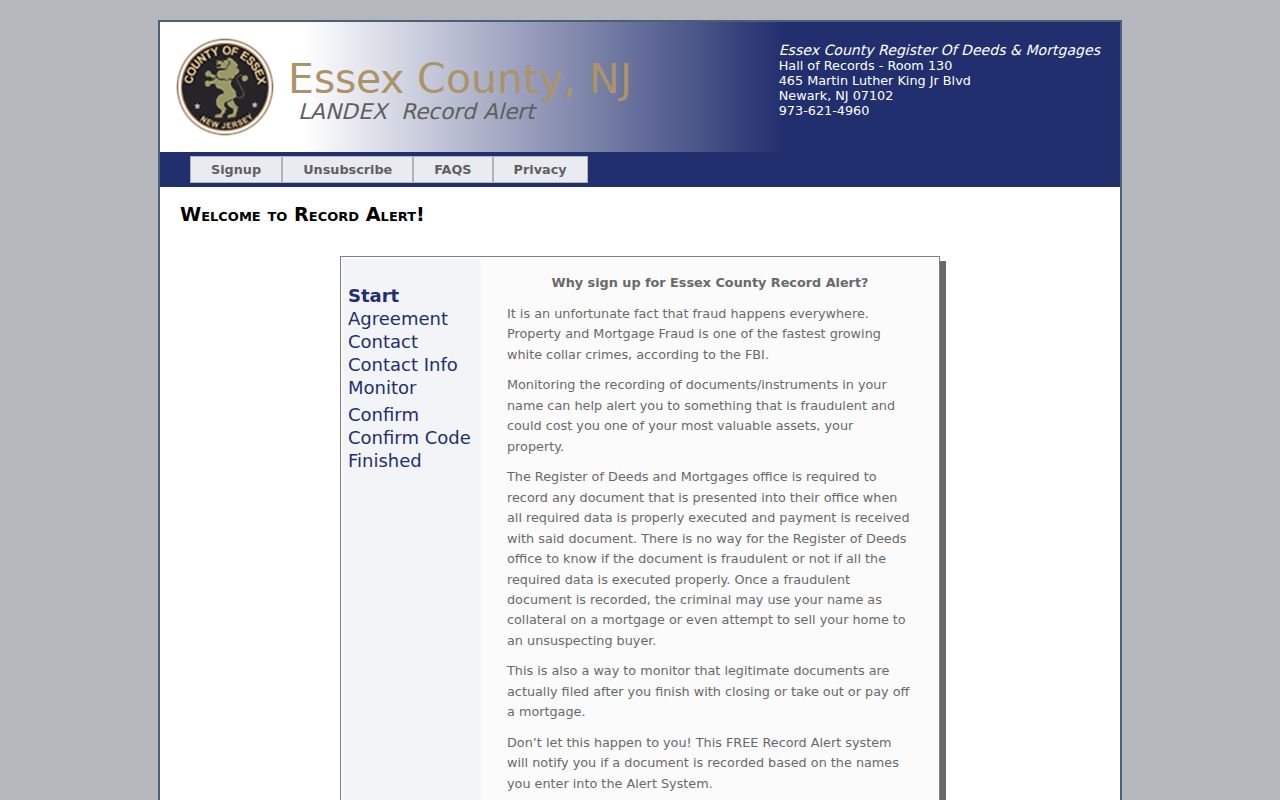
Record Alert monitors future recordings, but a dated chain still requires PRESS, office, archive, and deed-index research.
Newark Court Search Records
New Jersey Courts Find a Case is the state starting point for court-index research. Civil and foreclosure searches use a party name or docket number. Judgment liens take a name or docket. Tax Court also takes a block and lot. Municipal matters follow the ticket or complaint route. Newark Municipal Court keeps its own records-request process at 31 Green Street.
Party results can show a name, venue, docket number, case caption, and initiation date. A docket link appears with them. Those fields are metadata. A docket is not a disposition. A party is not necessarily a defendant. Confirm venue, caption, date, and the final record with the Judiciary before describing any case. Sealed, expunged, juvenile, adoption, and protected family records carry distinct access rules.
The Judiciary search hub gathers case-type routes. These can matter in a carefully verified Newark name inquiry.
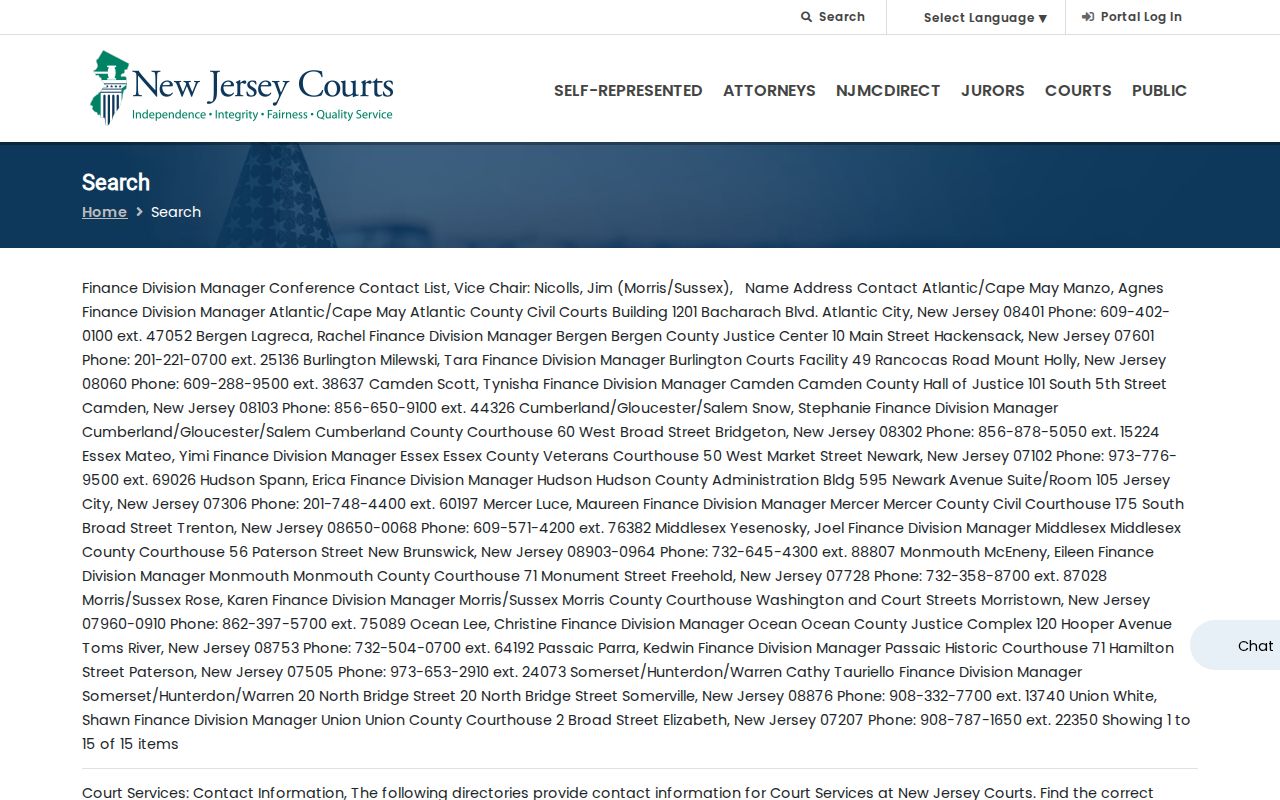
Use a docket or another exact identifier to seek a permitted copy. A result list is never the complete court record.
Current Newark Record Sources
Current record sources in Newark answer narrow questions, not broad ones. Each search works best when you carry the record's limits along with your search key. A property account points to one parcel record. A voter route belongs to election administration. A court index identifies a case. A business filing can show a role in a legal entity. No single source rolls up everyone living in Newark.
| Newark source | What it can confirm | Custodian | Access route |
|---|---|---|---|
| Tax account | Parcel, owner field, block and lot | City of Newark | Online property index |
| PRESS instruments | Recorded parties and document identifiers | Essex Register | Online from 10/01/1996, office for formal work |
| Registration status or list | Election-file status under applicable rules | Essex County Clerk | County and statewide routes |
| Case index | Party, venue, docket, and date | NJ Judiciary | Case-type-specific search |
| Public civic directory | Organizations and public contacts | City of Newark | Resource-directory search |
Commercial people-finder sites blend data that can be stale or mismatched. An official record names its custodian and its scope. So when a verifiable identifier matters, start with an official index. Treat any other lead as unconfirmed. Back it up with the issuing custodian or a second independent source.
Newark Voter and OPRA Access
A precise name is everything with New Jersey’s registration-status check. The screen matches against election records, not a general residents directory. State guidance requires an exact match to county data. Hyphens, initials, spaces, nicknames, and former names can all break a match. For voter lists themselves, the Essex County Clerk handles registration routes and voter-list requests. The county guide sets a $0.25 per district fee. Confirm the list date and request format with the Clerk before sending anything.
Records without a direct portal still have a path. Essex County’s OPRA intake takes focused requests. It works under the New Jersey Open Public Records Act, N.J.S.A. 47:1A-1 et seq. Name the record and the date range, then choose inspection, an electronic copy, or paper. The usual response window is seven business days. Electronic records are generally free. Copy fees run $0.05 per letter page and $0.07 per legal page, plus any allowed special-service charges.
One last caution: the state status screen is a live matcher. Test its controls while you search.
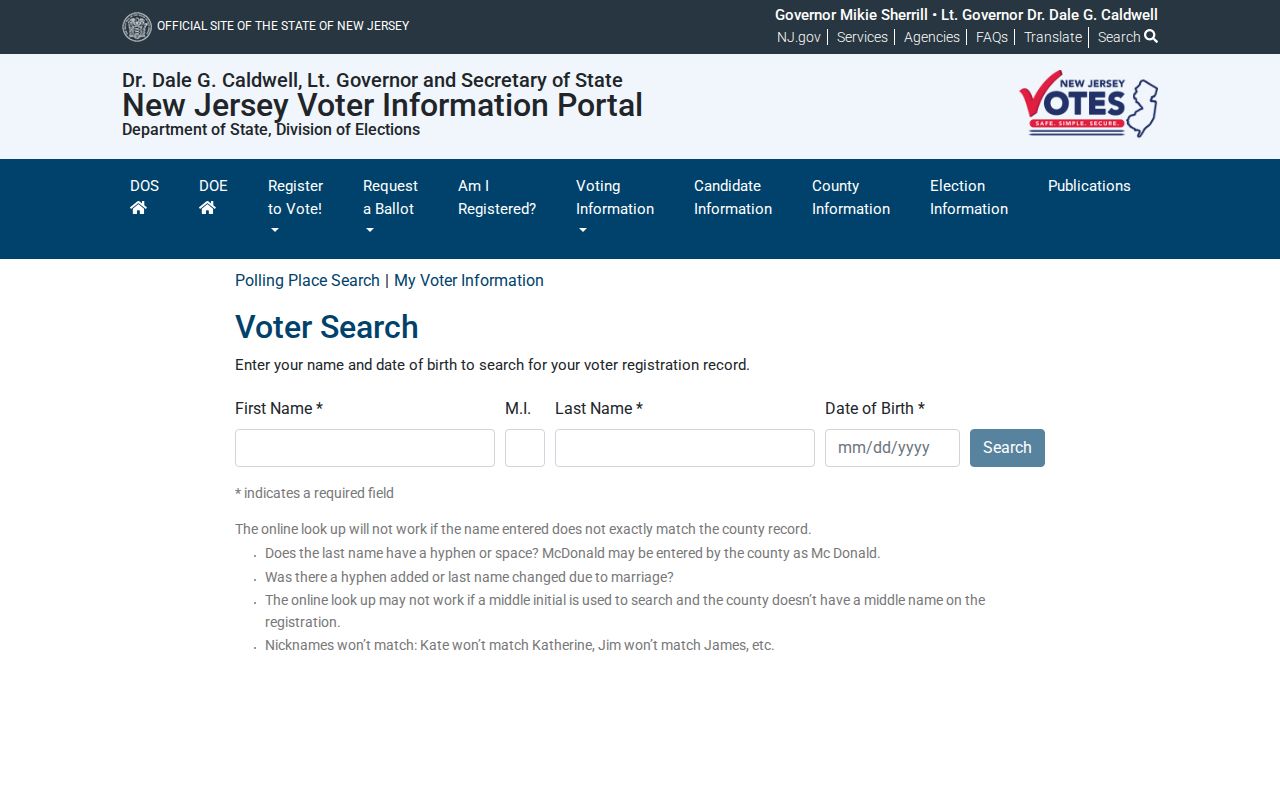
A no-result can reflect a matching difference, a move, a protected record, or a current-file issue. It does not prove that no record exists.
Newark Privacy Record Limits
New Jersey privacy rules can change what a Newark search returns. Daniel's Law protects home-address information for covered public servants across government systems. The Office of Information Privacy describes the program. NJGIN warns that owner names are redacted from hosted parcel and tax-list layers. The Address Confidentiality Program offers a lawful substitute address in covered cases. Neither a redaction nor a no-result invites any attempt to reconstruct a protected address. Vital and motor-vehicle records carry their own limits. Current state birth, marriage, and death records are restricted. Genealogical access generally opens for births over 80 years old. It also opens for marriages over 50 and deaths over 40. This is subject to identity and other rules. MVC personal information is not an ordinary public lookup. Ask the issuing agency about a correction, copy, or privacy request. Do not trust an incomplete result.
Newark Vital Record Windows
Birth, marriage, and death records are not open current-name indexes. The New Jersey Department of Health Vital Records program and Newark's local registrar both apply eligibility and identification rules. For genealogy, the documented thresholds are a birth record over 80 years old, a marriage record over 50, or a death record over 40, with the required proof and fee. State Archives material supplies older historical routes. A certification is an informational record. It is not a certified copy. N.J.S.A. 26:8-62 governs the registrar's certification and certified-copy authority. Keep the event place, year, full name, and relationship or eligibility information with any request. A historical event result is a research lead, not a shortcut to current identity or contact information.
Newark Newspaper and Archive Clues
The Newark Public Library's research guides point to a Cummings card-file index to the Star-Ledger covering 1972 through 1989. They also list Newark Evening News indexes for 1914 through 1972. Annual handwritten indexes start in 1914. These are finding aids, nothing more. Inspect the underlying microfilm, clipping, or article before treating an index entry as evidence. The New Jersey Historical Society adds family files, cemetery and church references, and photographs. It also holds scrapbooks and deed or will card indexes. The collections support a human-scale research trail. A directory year can place a printed name at an address. A newspaper index can point to a date. An archive collection can identify a record series. Preserve the source identifier for each step. Also preserve the collection identifier. Do this instead of blending the clues into one claim.
Newark Historical Directory Records
The Charles F. Cummings New Jersey Information Center at Newark Public Library holds a fully digitized Newark city-directory collection. It covers 1835 through 1964. The repository describes 104 objects. It also holds more than 217,000 files, scanned from the library's physical and microfilm holdings under a 2016 Carnegie Grant. A directory entry can supply a printed name, initial, and address. It may also list an occupation or business line, and sometimes an address cross-reference. It is still a dated publication. It does not prove a current residence. Search the surname and the address, then compare adjacent years. Record the printed page or image identifier, title, year, and publisher. The Newark directory book gives the collection details and archive alternatives. For family history, add newspapers, maps, and census material. Include naturalization, probate, or a deed only as distinct evidence layers.
- Roll
- A list made for one public purpose, such as an election file or tax list.
- Index
- A finding tool that points to a record, often without the full document.
- Parcel
- A defined piece of land identified by keys such as block and lot.
- Criss-cross directory
- An address-to-name section in a historical directory.
Some county records have no direct online index. Essex County's electronic request intake handles focused county-record requests in that situation.
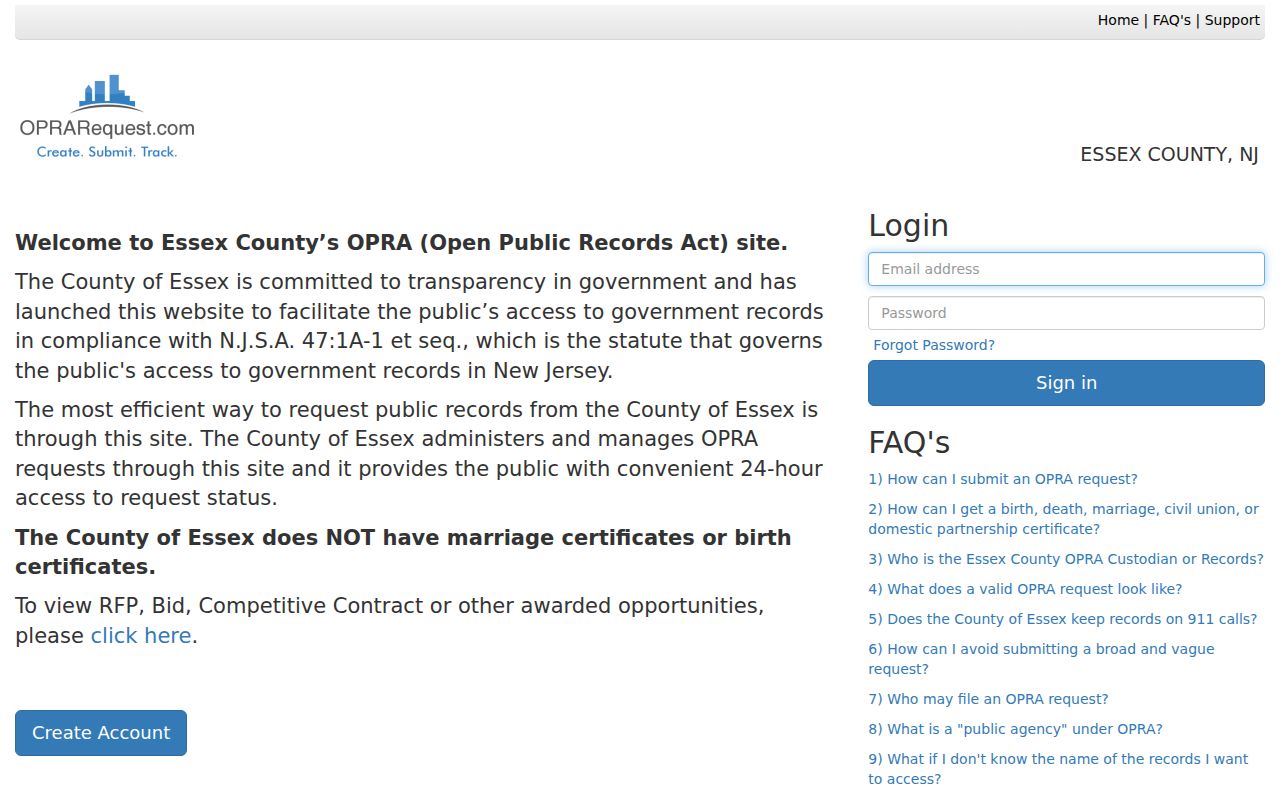
Name the record, custodian, and date range rather than requesting an undefined resident list.
Newark Neighborhood Record Geography
Geography shapes how a Newark residents directory search turns out. The city's historic-landmark material names Forest Hill, North Broad Street, James Street Commons, Military Park Commons, Four Corners, Lincoln Park, and Weequahic Park as distinct areas. A ward map layers on voting districts, blocks, and parcels. These layers answer different questions. A ZIP is postal geography. A ward is political geography. A historic district exists for preservation. Keeping those fields straight in your notes prevents a lot of dead ends in any resident lookup.
Civic pages add context without ever acting as a private roster. The Newark People's Assembly follows a ward-to-neighborhood model. It points to Forest Hill, Vailsburg, and Ironbound as examples. Love Your Block tracks public mini-grant activity across the city. Neither one lists households. They document organizations and programs, not every family or attendee on a given block.
One check belongs at the start of any street directory search. Run the address through the New Jersey Municipality Lookup first. Do not assume a Newark mailing label, ZIP, ward, or historic district points to the municipality that actually holds the record.